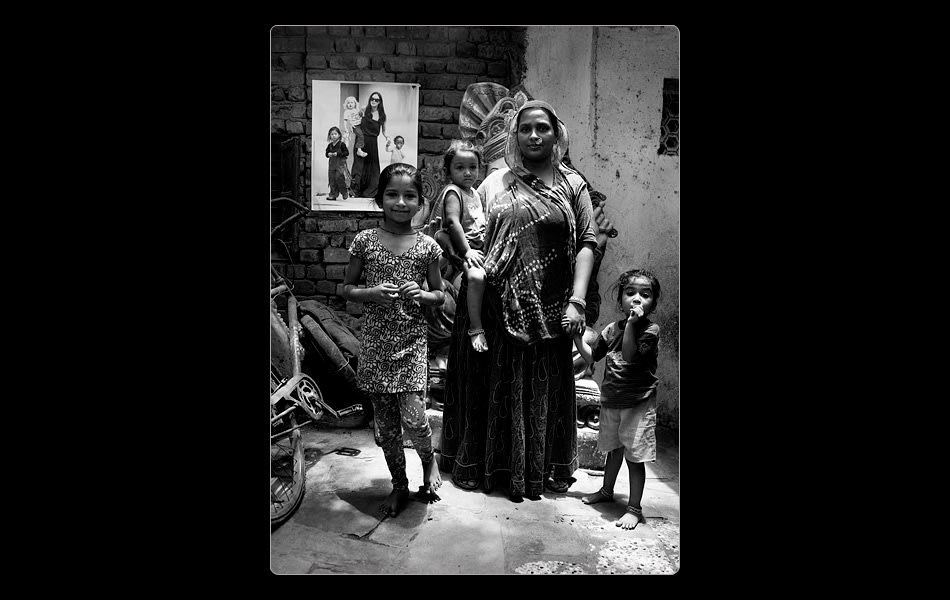
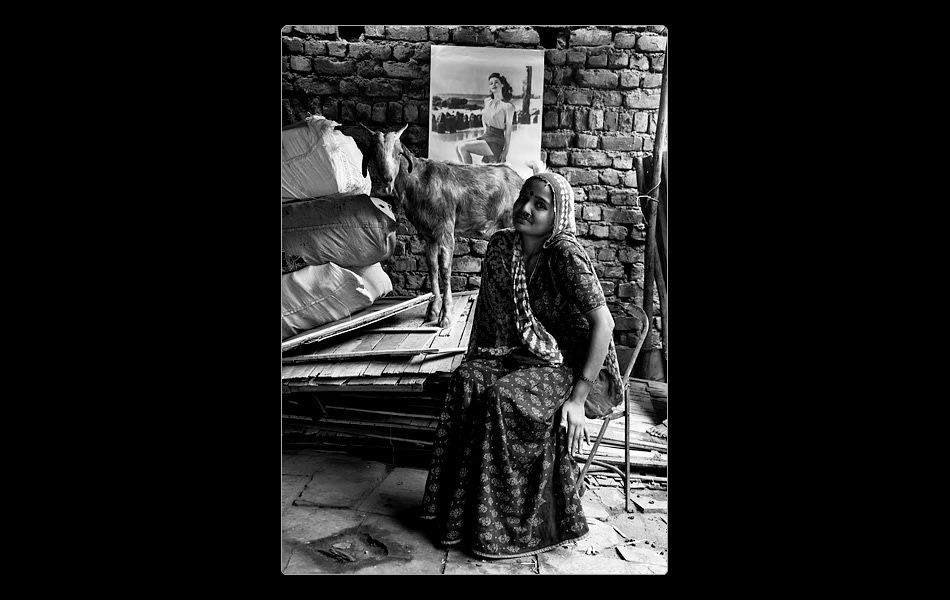
In these days of discord, disharmony, conflict and competition, finding affinity between two entities that are geographically far apart and no match to each other in socio-economic or cultural terms, is impossibility. But that is what this photo series did, and it went on to discover the impossible - A small slum area in the heart of the posh new city of Ahmedabad called HOLLYWOOD. The actual name of the area is Gulbhaitekra, but it has been popularly known as HOLLYWOOD for the last 4 decades for the reason that the women living here have a rustic beauty and glamour which is found to resemble that of Hollywood stars. Photographer KANNAGI KHANNA shares her images as she meets the enchanting women of Hollywood.

Showing posts with label Photography. Show all posts
Showing posts with label Photography. Show all posts
Monday, 23 April 2012



Sunday, 21 August 2011
Eric Lafforgue : Travel Photographer

Born in 1964, Eric Lafforgue lives in Toulouse, France. Ever since he was a young boy he has been fascinated by far away countries and travelling and produces content for television, radio, the music industry and travel photography as a freelance photographer and multimedia producer.
His career as a photographer began quite late in 2006. But his success has been startlingly rapid. Soon after first posting his pictures on the website Flikr he began to get professional commissions, and with in just a few years he has come to be regarded as one of the world’s best travel photographers. He is perhaps best known for his work on North Korea, Papua New Guinea, and the tribes of Ethiopia. In 2008, his work on the people of Papua was displayed at the prestigious VISA photojournalism festival in Perpignan.
[courtesy:http://www.politicaltours.com]

Photograph © Eric Lafforgue
Friday, 5 August 2011
what is Photojournalism?

Photojournalism is a branch of the field of journalism characterized by the use of images to tell a story. The images in a photojournalism piece may be accompanied with explanatory text, or shown independently, with the images themselves narrating the events they depict. [read more...]
Few examples for Photojournalism.(Courtesy: Yahoo! India News – Thu, Aug 4, 2011)
Africa, consumed by hunger
As drought, famine and war ravage the Horn of Africa, nearly 29,000 children aged below five have already died. Even as it battles the worst drought in 60 years, Somalia can barely lick the wounds inflicted by civil strife, which hasplagued the beleaguered nation for two decades. Impoverished refugees fleeing the country to aid camps in Kenya have to face the wrath of Al Qaeda-backed Shebab militia on the poorly policed border between the countries. The crisis, which the United Nations declared as more serious than the 1984 Ethiopia famine that claimed nearly a million lives, now threatens to spread to Ethiopia, Kenya and Djibouti.

A Somali father and daughter wait in line at a refugee registration centre at Dagahaley refugee site within the Dadaab complex in Kenya after being displaced from their home in southern Somalia by the famine that is ravaging the Horn of Africa. An estimated 3.7 million people in Somalia -- around a third of the country’s population -- are on the brink of starvation. Aid agencies are stretched in trying to cope with a daily influx of Somalis escaping both the drought and al-Shabab extremists who have taken advantage of the famine to forcefully arrest and recruit men trying to escape.

Aden Salaad, 2, is bathed by his mother at a Doctors Without Borders hospital in Dagahaley Camp in Kenya, where he is being treated for malnutrition. UN refugee chief Antonio Guterres said Sunday that drought-ridden Somalia is the "worst humanitarian disaster" in the world.

An aid worker using an iPad films the rotting carcass of a cow in Wajir near the Kenya-Somalia border. Since drought gripped the Horn of Africa, and especially since famine was declared in parts of Somalia, the international aid industry has swept in and out of refugee camps and remote hamlets in branded planes and snaking lines of white 4x4s. This humanitarian, diplomatic and media circus is necessary every time people go hungry in Africa, analysts say, because governments -- both African and foreign -- rarely respond early enough to looming catastrophes. Combine that with an often simplistic explanation of the causes of famine, and a growing band of aid critics say parts of Africa are doomed to a never-ending cycle of ignored early warnings, media appeals and emergency UN feeding -- rather than a transition to lasting self-sufficiency. [See more..]
Thursday, 4 August 2011
Subscribe to:
Posts (Atom)